
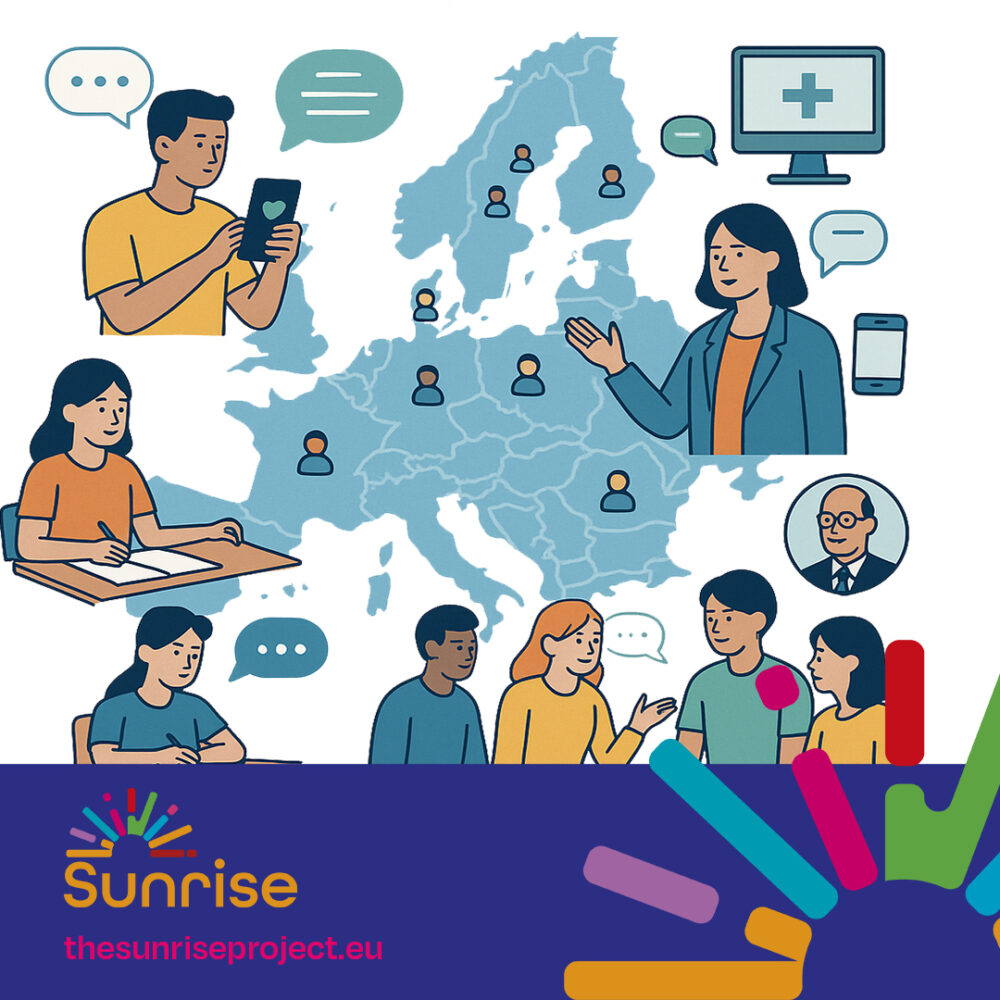
Deliverable D1.2 significantly advances the SUNRISE project’s mission to co-create a scalable, digital programme for adolescent cancer prevention across Europe. Building upon the foundational framework established in D1.1, this new deliverable captures insights from an expanded set of co-creation activities involving over 320 stakeholders across eight European countries—including adolescents, educators, school principals, and policymakers.
Three new activities formed the core of D1.2:
- The Preliminary Feasibility Assessment Workshop (36 participants) explored the ethical, psycho-social, and technical dimensions of three types of digital tools—social media, mobile/web platforms, and conversational agents—using a PESTLE analysis and interactive discussions to identify conditions for sustainable implementation.
- The First Round of School-as-a-Living-Lab (SALL) Sessions (210 participants) engaged diverse school-based stakeholders in co-creating health promotion strategies. Conducted across eight countries, these sessions examined the five SUNRISE use cases—focusing on health literacy, diet, smoking prevention, and broader cancer awareness—while accounting for socio-economic, cultural, and geographical diversity.
- Cross-national Interviews on Barriers and Facilitators (80 participants) gathered insights from educators, principals, and policymakers on structural, institutional, and cultural factors influencing the sustainability of school-based health interventions.
The findings emphasize the importance of context-sensitive, inclusive, and culturally aware digital health interventions, as well as the need for long-term institutional support, teacher training, and digital readiness.
Additionally, D1.2 introduces the use of a co-creation monitoring tool guided by the RILEC framework (Relevance, Inclusiveness, Learning, Engagement, and Clarity). This tool enabled a systematic evaluation of session quality and inclusiveness, offering actionable recommendations for improving future stakeholder engagement.
Collectively, these insights strengthen the SUNRISE project’s stakeholder-driven requirements framework and directly inform the technical development of its digital tools. They also align closely with the European Code Against Cancer (ECAC) and the project’s broader goals of promoting equitable, sustainable health behaviour change in schools.
The work documented in D1.2 sets the stage for the upcoming Deliverable D1.3, which will consolidate all findings into a finalised set of actionable requirements for the SUNRISE digital intervention toolkit.